
Think about the last time your child came home without a lunch box, water bottle, notebook, or favorite belonging. For most families, it is a familiar inconvenience. For 13-year-old Abdul Saboor, it became the starting point for an idea he called TagX.
Abdul had noticed a recurring problem among his classmates. Children would sometimes leave their belongings behind at school, where those items eventually reached the administration. The challenge was simple: how could a misplaced item be identified and safely returned to its rightful owner?
His first answer was specific. Abdul wanted to create a system for schools where students could place QR-enabled tags on their belongings, allowing school management to identify the item and reconnect it with the right child.
But over the next four weeks, something else began to develop alongside the product: Abdul's approach to solving problems.
From a School Problem to a Bigger Possibility
When Abdul first presented his concept, his thinking was centered on schools — the environment where he had observed the problem. During his first one-on-one session with StartupKidz, he was encouraged to look beyond that initial context. What if TagX was not limited to schools?
Could the same idea be useful in parking areas, workplaces, public spaces, or other environments where many people and belongings converge but management capacity is limited?
That question changed the direction of his thinking. Instead of asking only where TagX could be used, Abdul began asking what problem it was actually solving. He reworked his interface around four ideas: Target, Find, Protect, and Endless Possibilities.
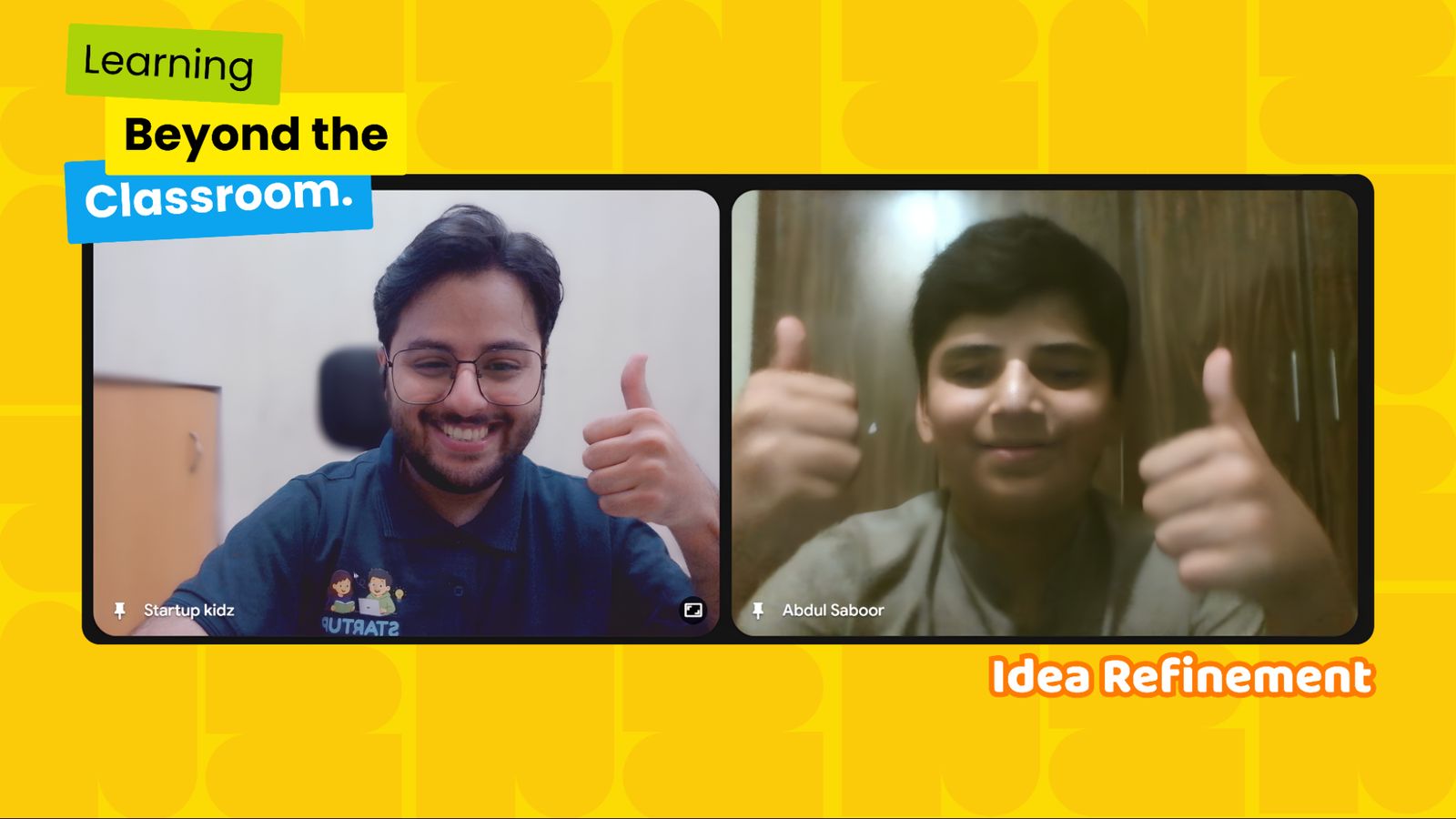
The important change was not simply the interface. Abdul became more willing to question his first assumption, explore different possibilities, and use feedback to refine his idea.
Designing for the Person Who Finds It
The second session shifted the focus to another part of the experience: the person who finds a lost item. A QR code can provide the technology, but what happens when someone actually encounters the tag? Would it be noticeable? Would the instructions be easy to understand? Would someone unfamiliar with technology know what to do?
These questions led Abdul to think more carefully about the design of his tags. The team explored ways to make them visually distinctive, easy to understand, and potentially adaptable to familiar local languages such as Punjabi. The objective was simple: make the experience as frictionless as possible for the person who finds the item.
Abdul was beginning to think beyond building a product. He was considering the people who would actually interact with it.
From Prototype to Real-World Testing
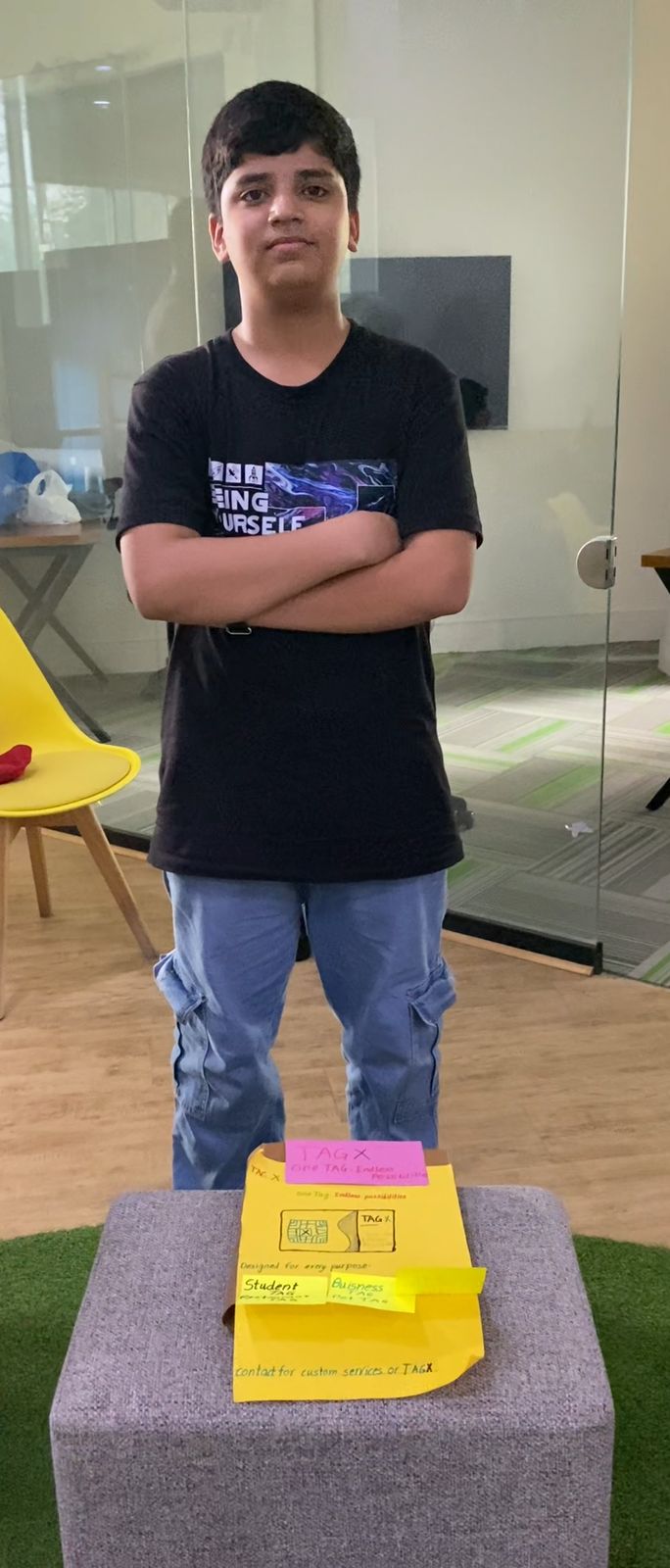
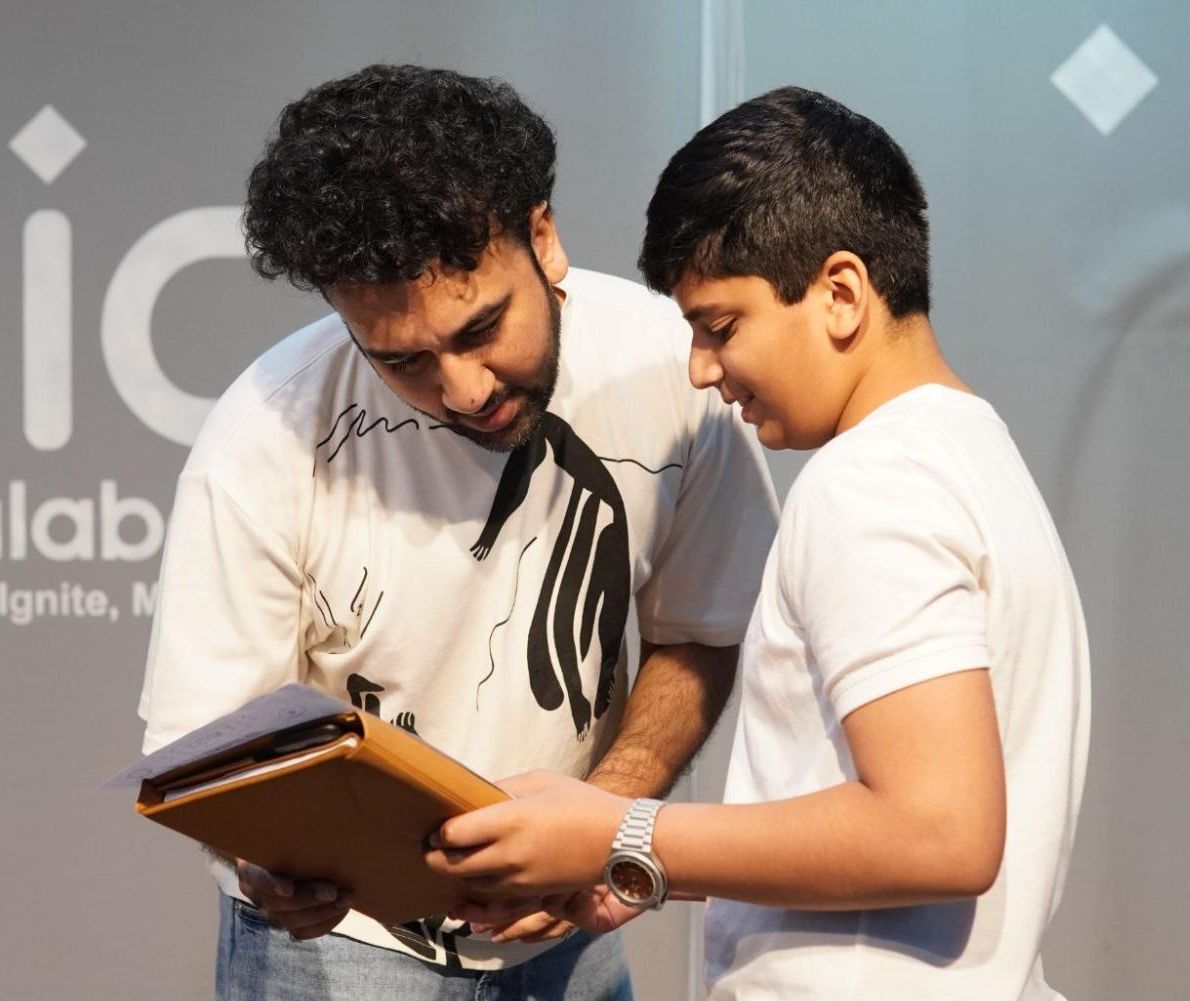
By the third session, Abdul had developed physical tags designed to guide users through the process more seamlessly. The StartupKidz team decided to test them in a real operating environment. We purchased the tags and placed them on equipment used in our operations, including cameras and microphones.
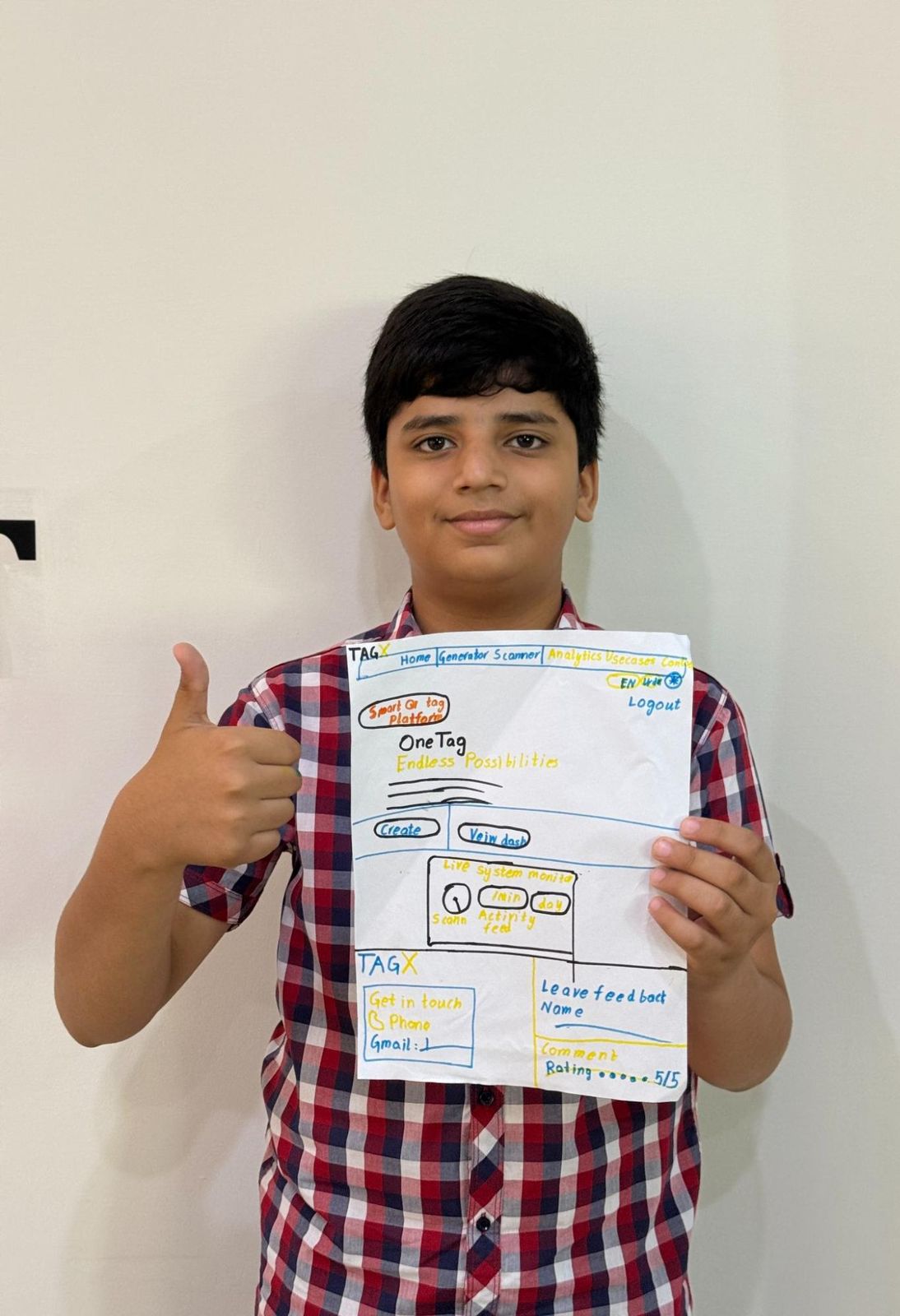
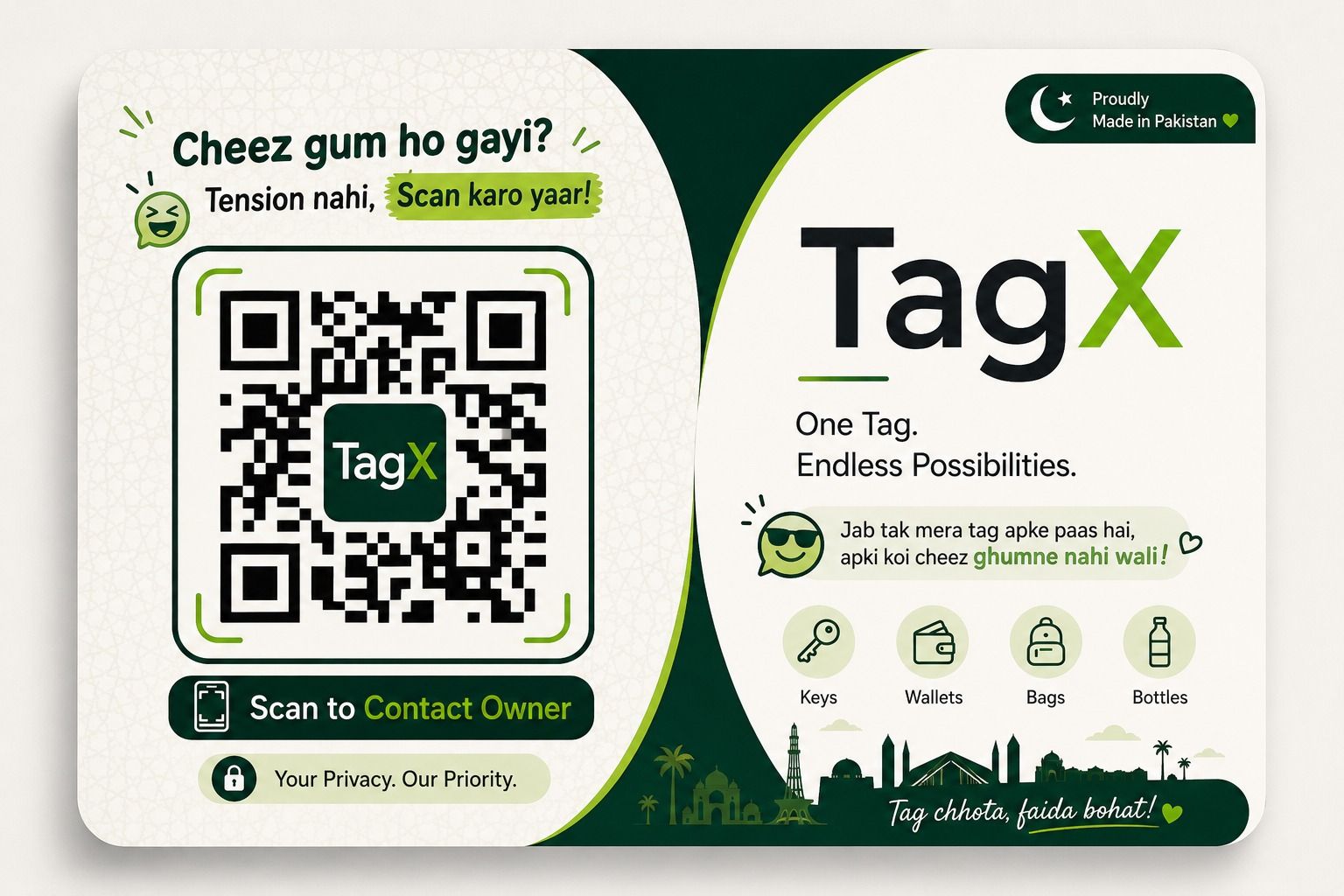
For Abdul, this was an important transition. TagX was no longer only an idea being discussed. It was something that could be used, observed, and improved through practical experience.
StartupKidz subsequently began incorporating the stickers into its own operations as part of an alpha-testing phase, giving Abdul an opportunity to see how his product performed beyond the original school-focused use case.
400+ Kilometers of Commitment
There is another part of Abdul's journey that deserves recognition. Abdul and his father, Waqar Mughal, travelled from Gojra to Faisalabad for all four in-person sessions, covering more than 400 kilometers in total. Waqar, who has experience in computer science, has also supported Abdul in developing TagX from the ground up.
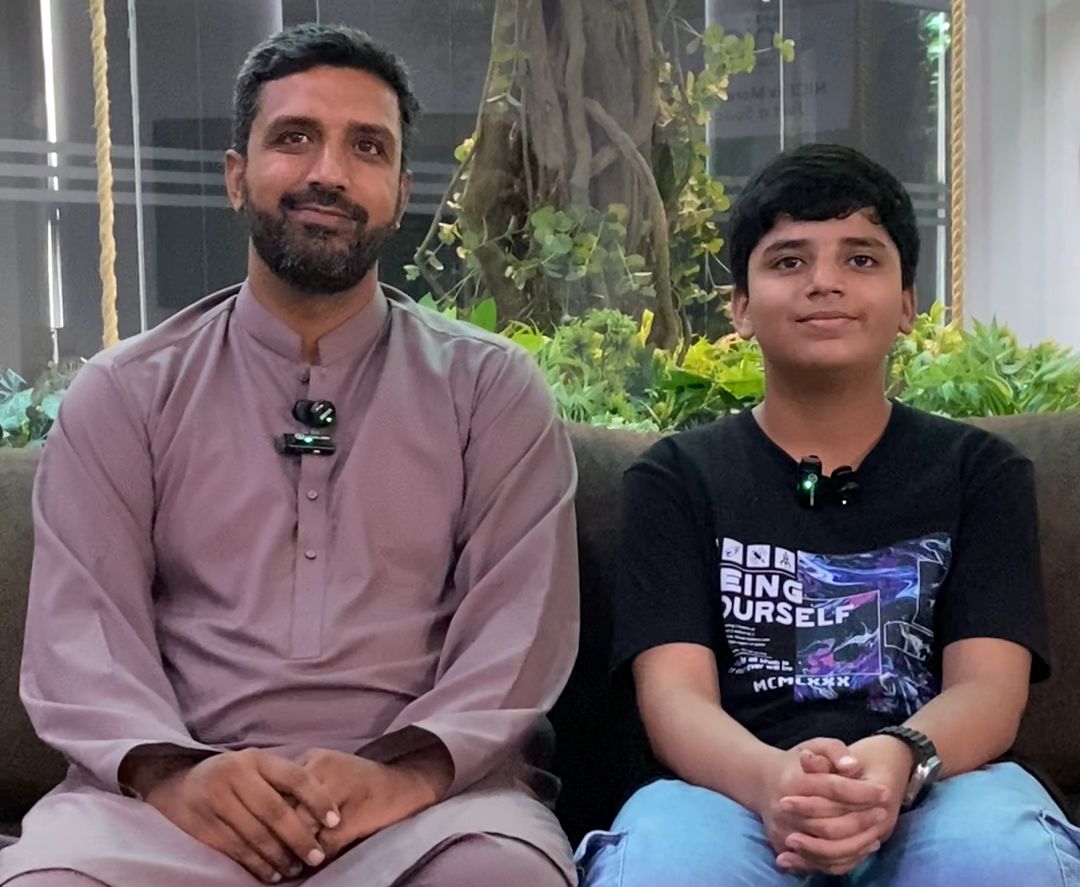
That commitment matters. At StartupKidz, we do not believe an institution should take ownership of a child's success. Our responsibility is to provide a safe and equitable environment where children can explore ideas, receive candid feedback, experiment, and learn through iteration.
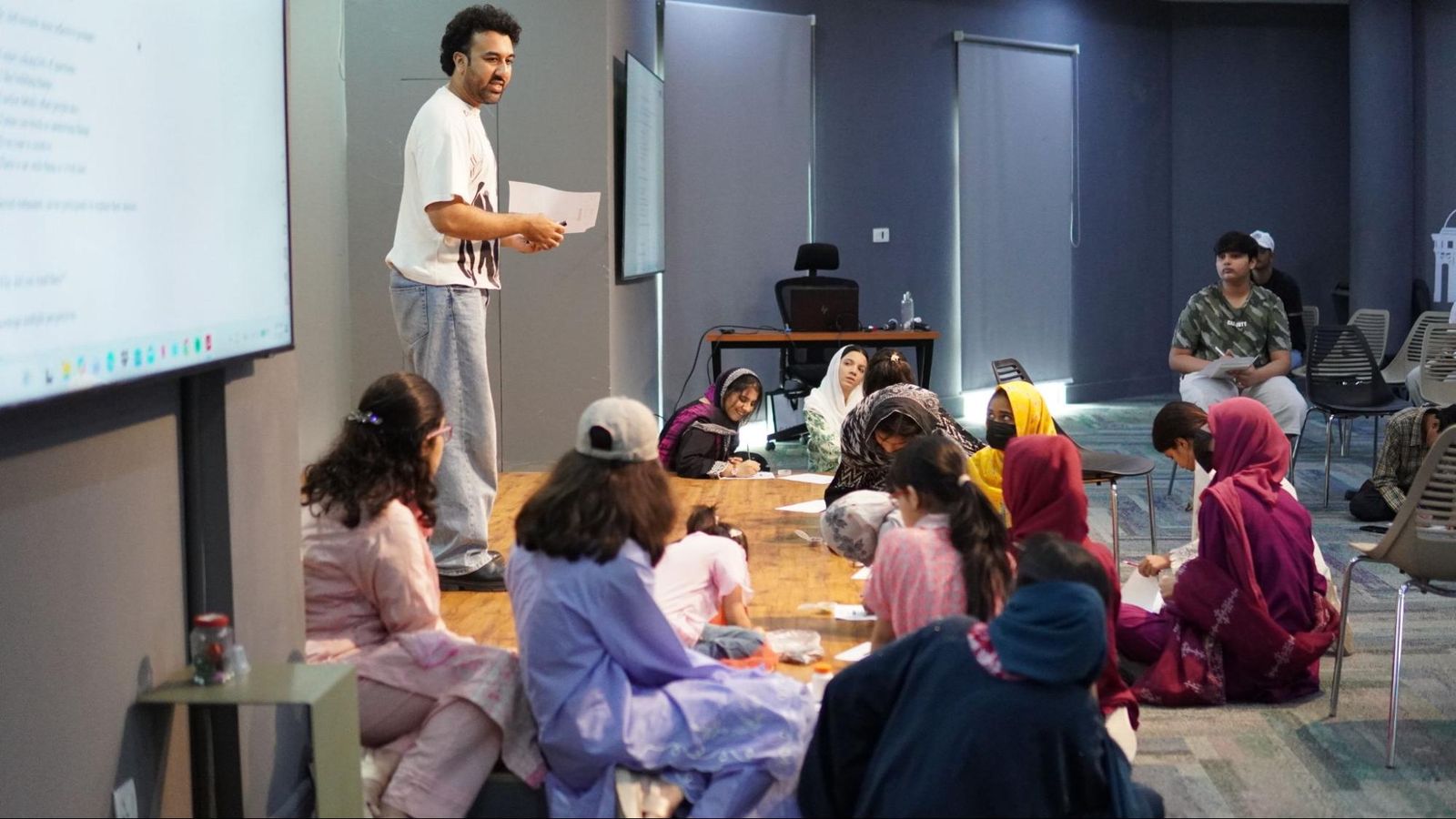
The effort and progress belong to the child and the family. In Abdul's case, both have been visible throughout the journey.
Building More Than a Product
In four weeks, Abdul moved from a school-specific idea to a broader B2B opportunity. He developed a working TagX product and physical tags, tested them in a real environment, and began exploring how different businesses and stakeholders could potentially use the solution. His market research and customer discovery have progressed, and he is now focused on identifying TagX's first paying customer.
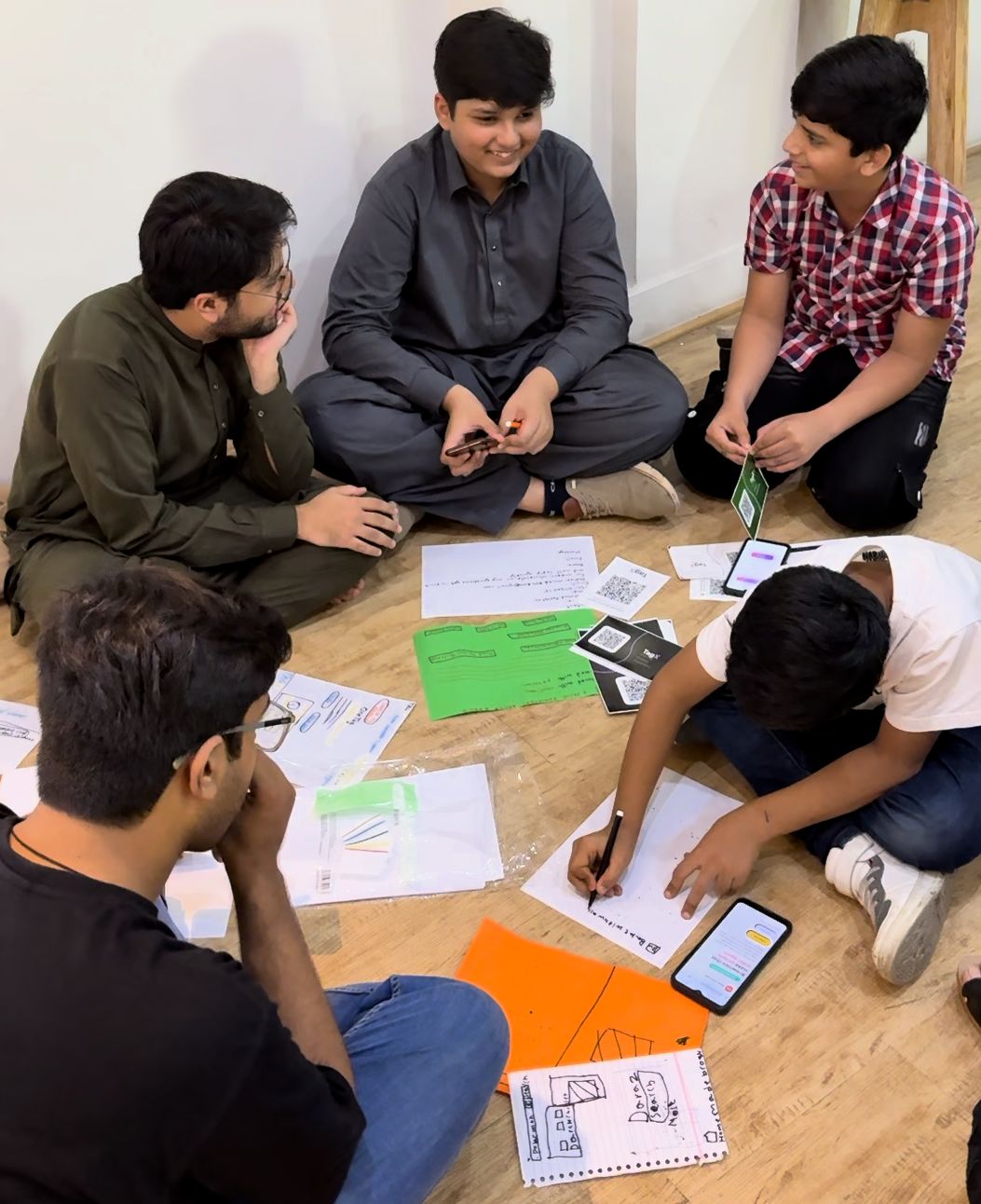
He has also taken ownership of TagX's public presence. Abdul managed the Instagram content himself and grew the account to 320 organic followers in one month.
These are tangible outcomes. But they are not the most important measure of his four-week journey.
The more meaningful change is in how Abdul approaches a problem. He has become more willing to receive criticism, act on feedback, reconsider assumptions, and iterate. He is learning to think more carefully about customers, usability, and context.
He is not simply building a product. He is developing the habit of looking at a problem from more than one perspective.
The Journey Is Still Beginning
Abdul does not yet know exactly where TagX will eventually go. And that is okay. At 13, having every answer may be less important than learning how to ask better questions.
His four-week journey has given him an opportunity to notice a real problem, propose a solution, receive criticism, test assumptions, and try again.
TagX sai ab aap ka kuch ghomnai nai wala.
He started with something familiar to a child: a lost lunch box. Four weeks later, he had a working product, physical tags, early audience traction, real-world testing, and a broader way of thinking about problems.
The achievement belongs to Abdul and the family that supported him. StartupKidz provided the environment. Abdul did the building. His family made the commitment.
And perhaps that is the most important part of his story: a child does not always need someone to tell him what to build. Sometimes, he needs a safe place to discover what he can build himself.