

For Ayesha, reading is a form of transportation. She loves storybooks and comics. She describes reading as a way to move from one realm to another without leaving the comfort of her bed.
But there was one thing she felt was missing from that experience. The objects that help readers stay connected to a story often felt predictable — minimal, sophisticated, and functional, but rarely playful or personal.
Ayesha wanted to change that. At 12, she began building Nishani, a brand inspired by the characters, memories, and feelings that stay with us long after a story ends. Her idea was not simply to create something useful. She wanted to nurture the inner child in every reader.
Leave a Nishani where the story stays.
What Ayesha did not know when she started was how difficult it would feel to turn that idea into something real. And what she certainly did not know was that, four weeks later, she would have evidence that she could.
She Had the Idea. The Bigger Question Was: Where Do I Start?
Ayesha entered the program already knowing she wanted to build something around bookmarks. What she lacked was a roadmap. At the beginning, she was reserved and uncertain about discussing what she wanted to create. Building an entire brand from scratch seemed intimidating, particularly at her age.
The first step was not to give her all the answers. It was to make the challenge smaller.
During the first Idea Jungle session, Ayesha explored two possible directions for Nishani: visual storytelling through cartoon characters for readers who love comics and fictional worlds, and motivational messages for readers who connect with affirmations and meaningful words.
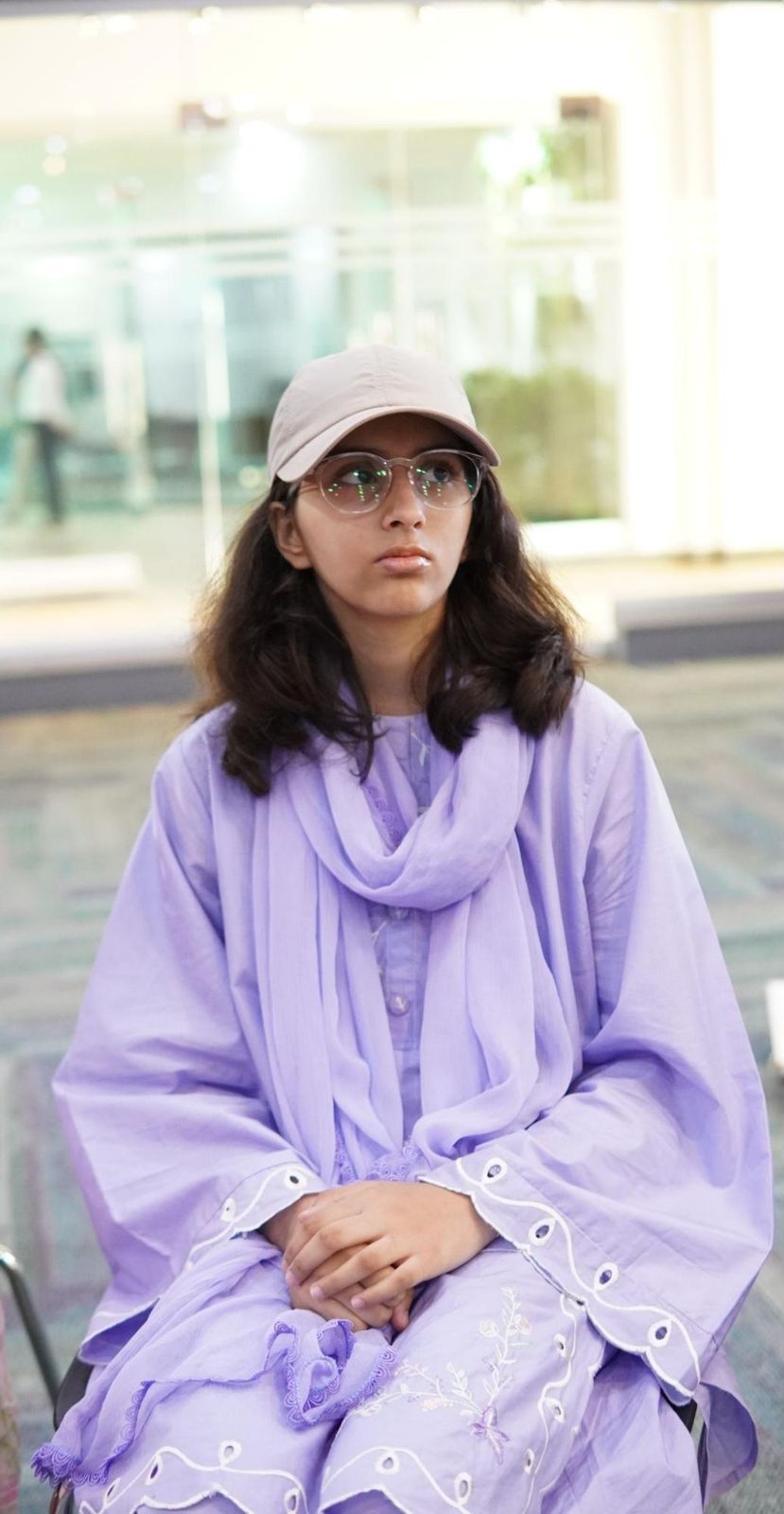
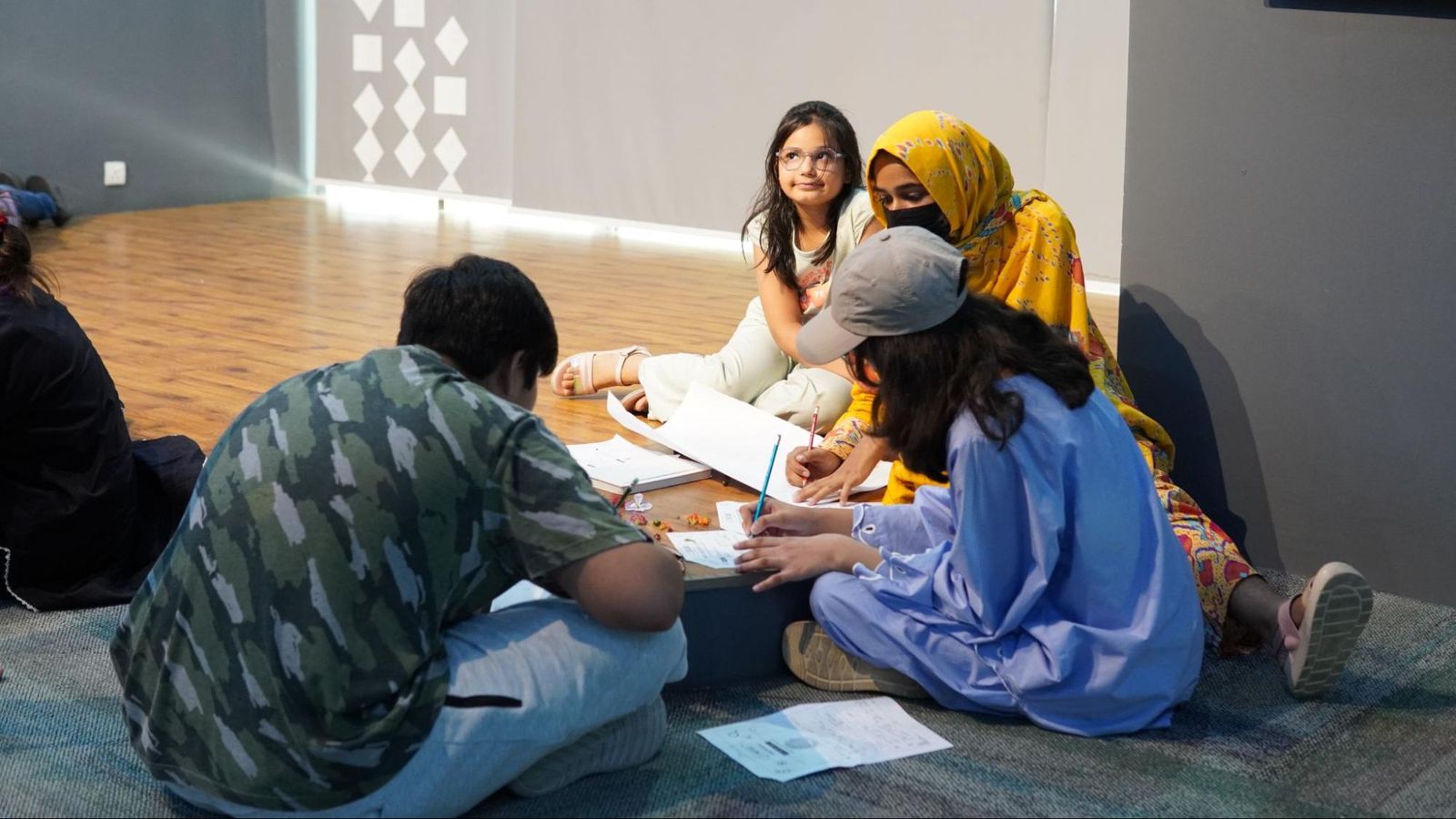
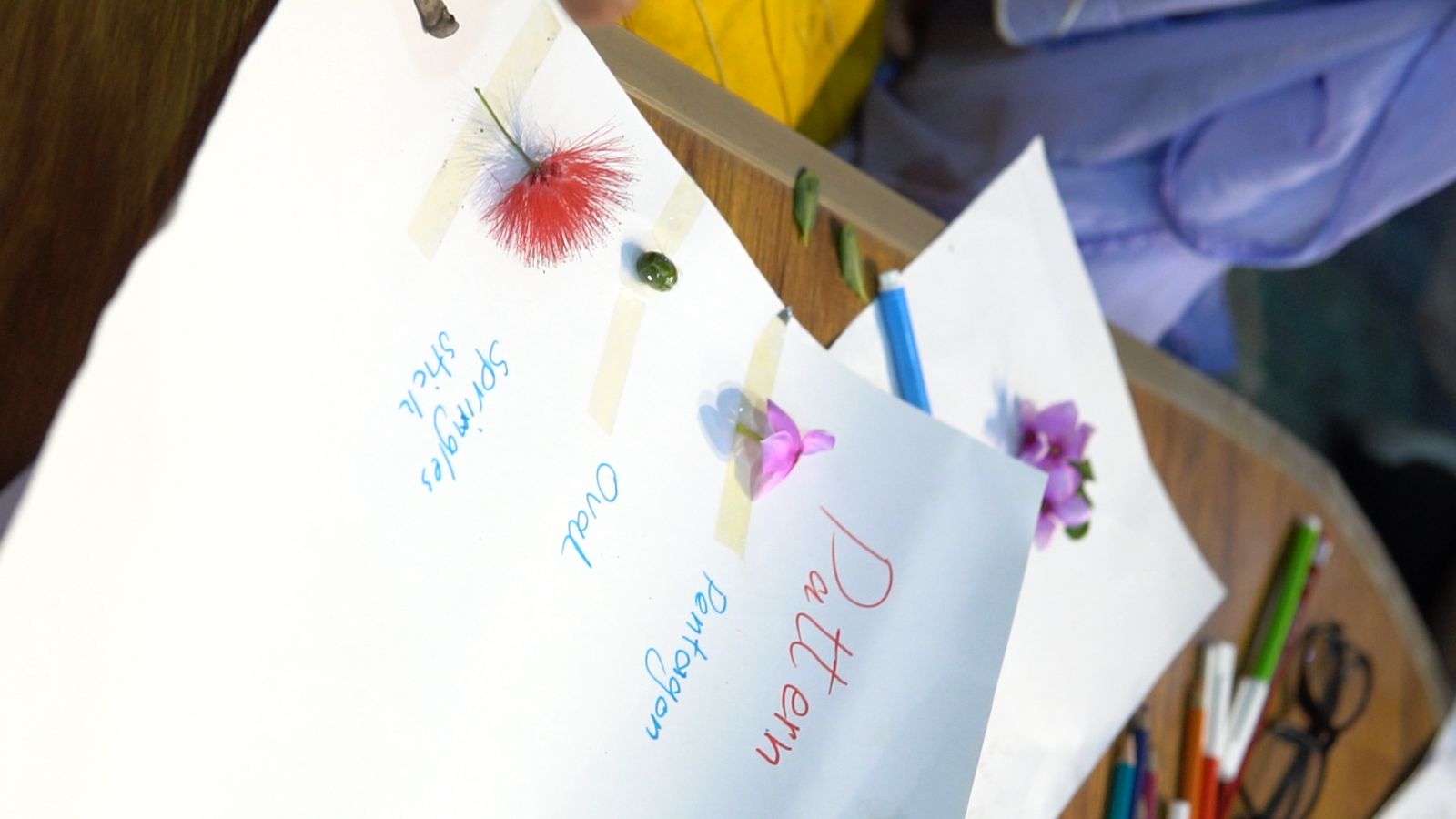
At home, her parents helped her turn the larger challenge of "building a brand" into smaller, achievable milestones. That changed the way the task looked. Instead of asking, "How am I going to build all of this?" she could ask, "What can I build next?"
Within two weeks, she had produced five designs across the two segments. The idea was no longer sitting in her head. It was on the table in front of her.
Then She Stopped Guessing and Started Asking
The next challenge was understanding whether other people saw value in what she was creating. During her second one-on-one session, StartupKidz Ambassador Ms. Minahil suggested exploring painted and customizable designs based on consumer preferences.
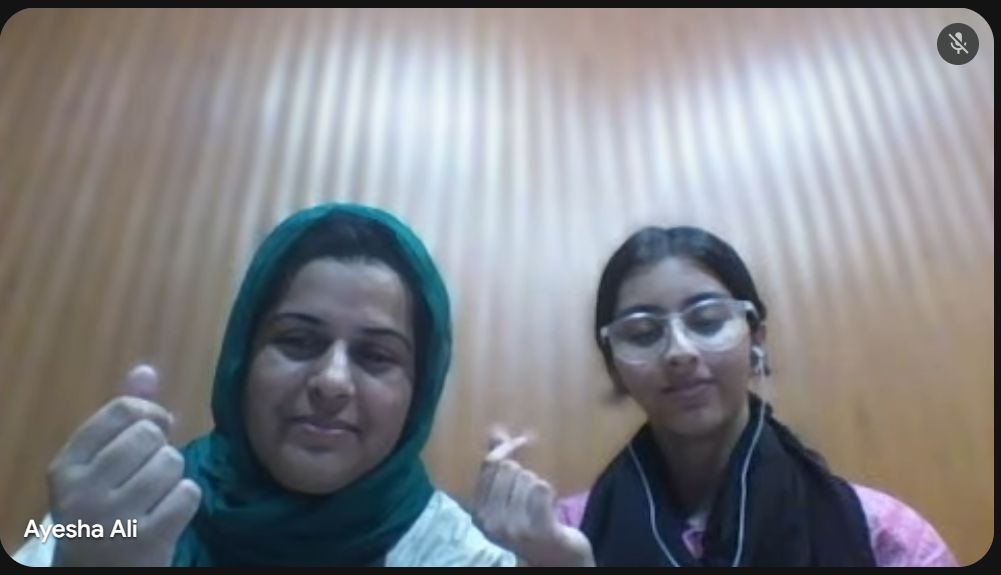
Ayesha was given a practical task: speak to 20 potential customers and find out which direction resonated with them. She did exactly that. Using references from Pinterest, she showed people different options and asked them to choose according to their own interests.
The result validated something important: both segments were unanimously preferred by the people she interviewed. But the conversations also gave her something more valuable than validation. They gave her refinement. Customers indicated a preference for sleek designs with minimal width.
Ayesha had gone looking for an answer to one question — which direction do people like? — and came back with a second lesson: building is not just about creating what you like. It is about listening closely enough to understand what others value.
Three Strangers Walked Up to Her Table
Then came the Build Cave. The session was designed to simulate a marketplace. Each young founder displayed a product, while visitors received 300 rupees in fictional currency and decided independently where they wanted to spend it. There was no requirement to buy. A product had to attract attention. A founder had to explain it. And the customer had to decide.
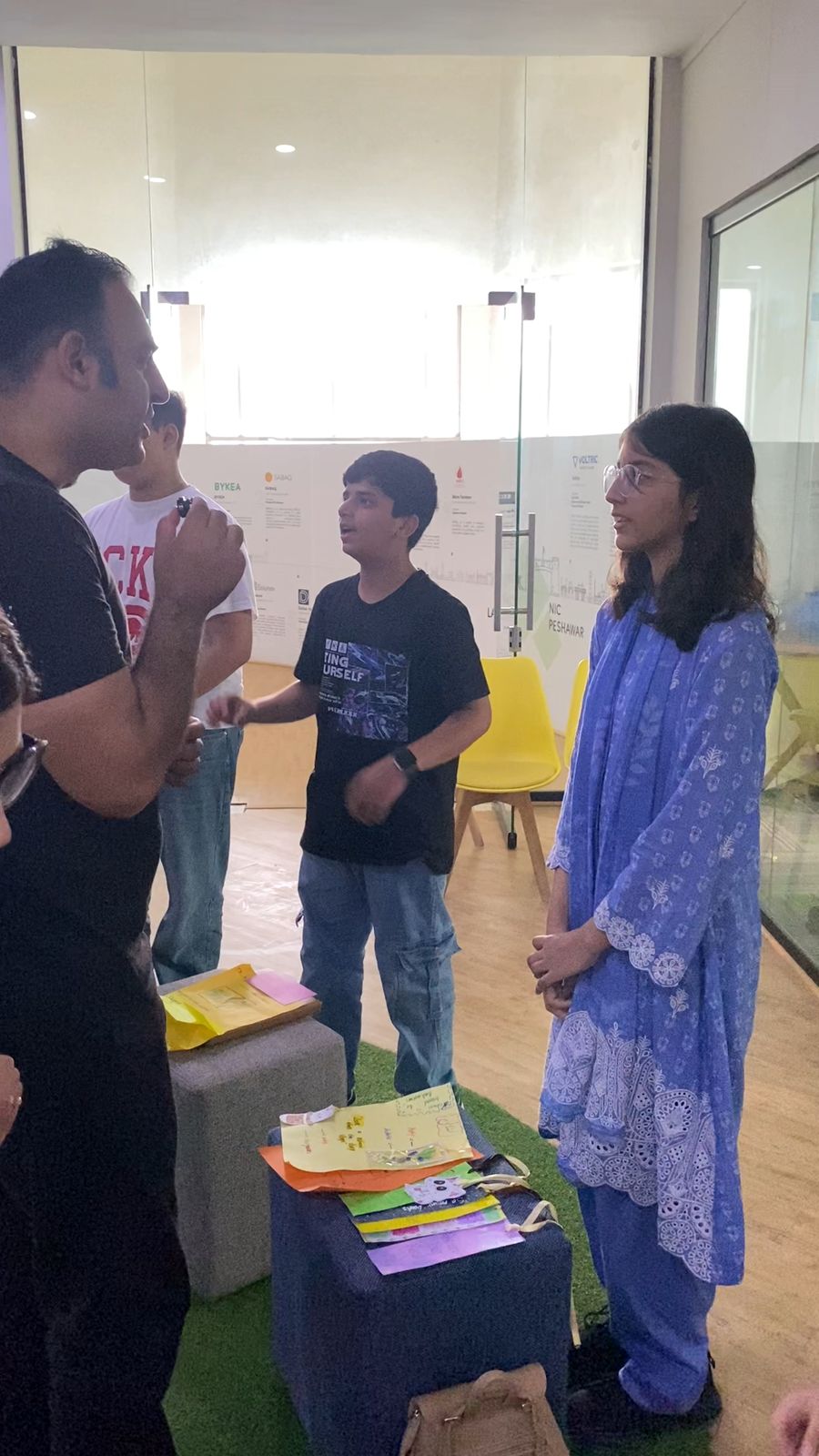
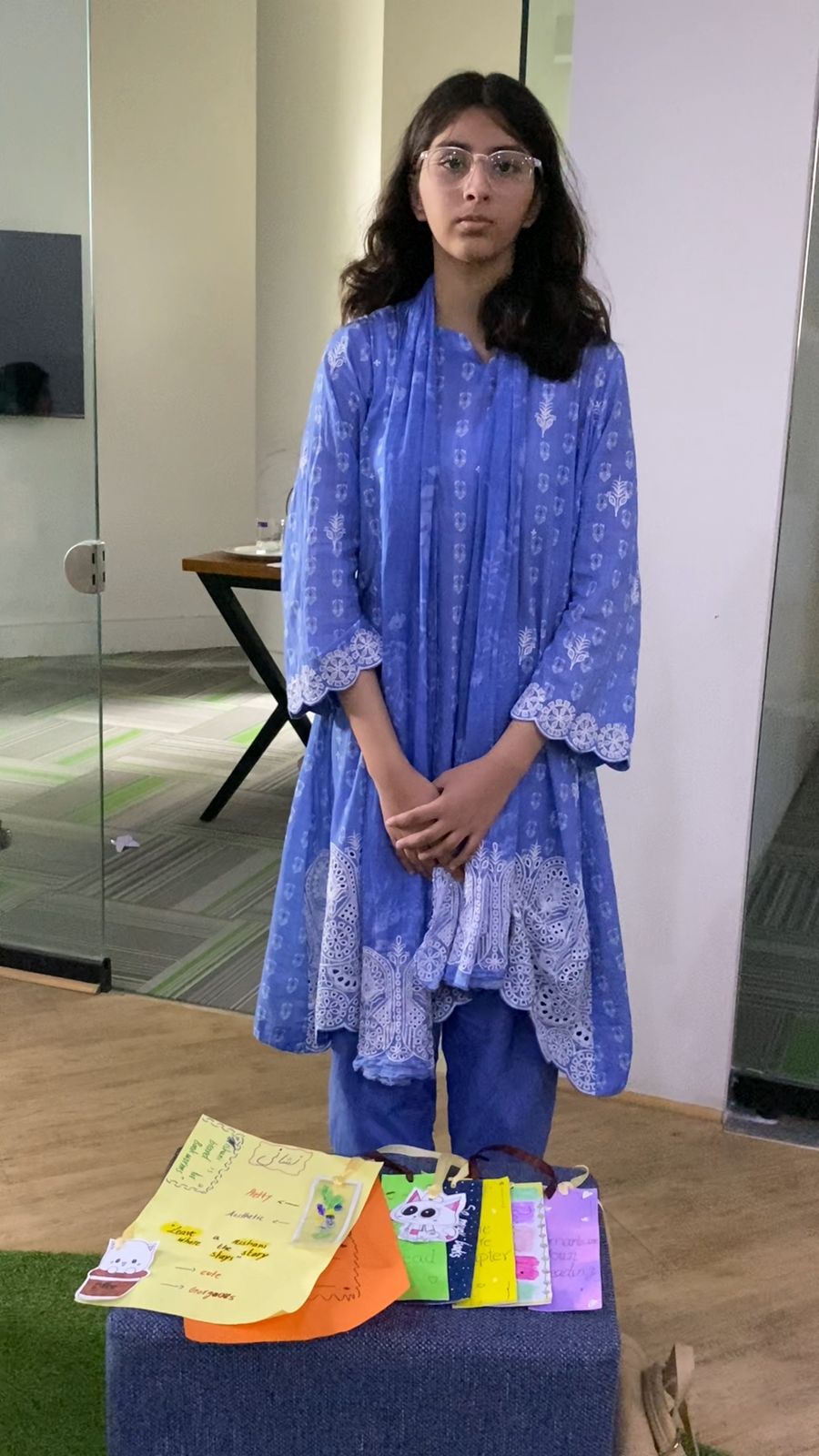
Three people approached Ayesha's stall. She presented her designs, spoke about Nishani, and explained what she had created. All three bought from her.
Three strangers. Three bookmarks. Three sales.
For someone who had arrived unsure whether she could build something from scratch, that moment mattered. Those sales gave Ayesha something a lesson alone could not provide: proof. Proof that someone she did not know could see value in something she had created.
That was the moment she began to believe she could actually do this.
She Didn't Build Alone. She Learned How to Ask for Help.
The story of Nishani is also a story about family. Ayesha's mother, Dr. Bushra, helped her break the overwhelming task of building a brand into smaller, achievable steps. She also visited local bookshops to observe what was already available in the market. Her father supported that exploration by taking her to those bookshops. And Ayesha collaborated with her older sister to create hand-painted designs.
What surprised Ayesha was how well they worked together. She was learning something equally important: independence does not mean doing everything alone. It means knowing what you can do yourself, knowing when to ask for help, and continuing to own the work.
Four Weeks Later, the Numbers Told Part of the Story
By the end of the four weeks, Ayesha had:
- 30 hand-drawn bookmarks
- 36 pieces of Instagram content
- 120 followers on the Nishani Instagram page
- 3 sales to three different customers during Build Cave
She also learned how to create content independently and use AI to help build her brand website during the Digital Frontier.
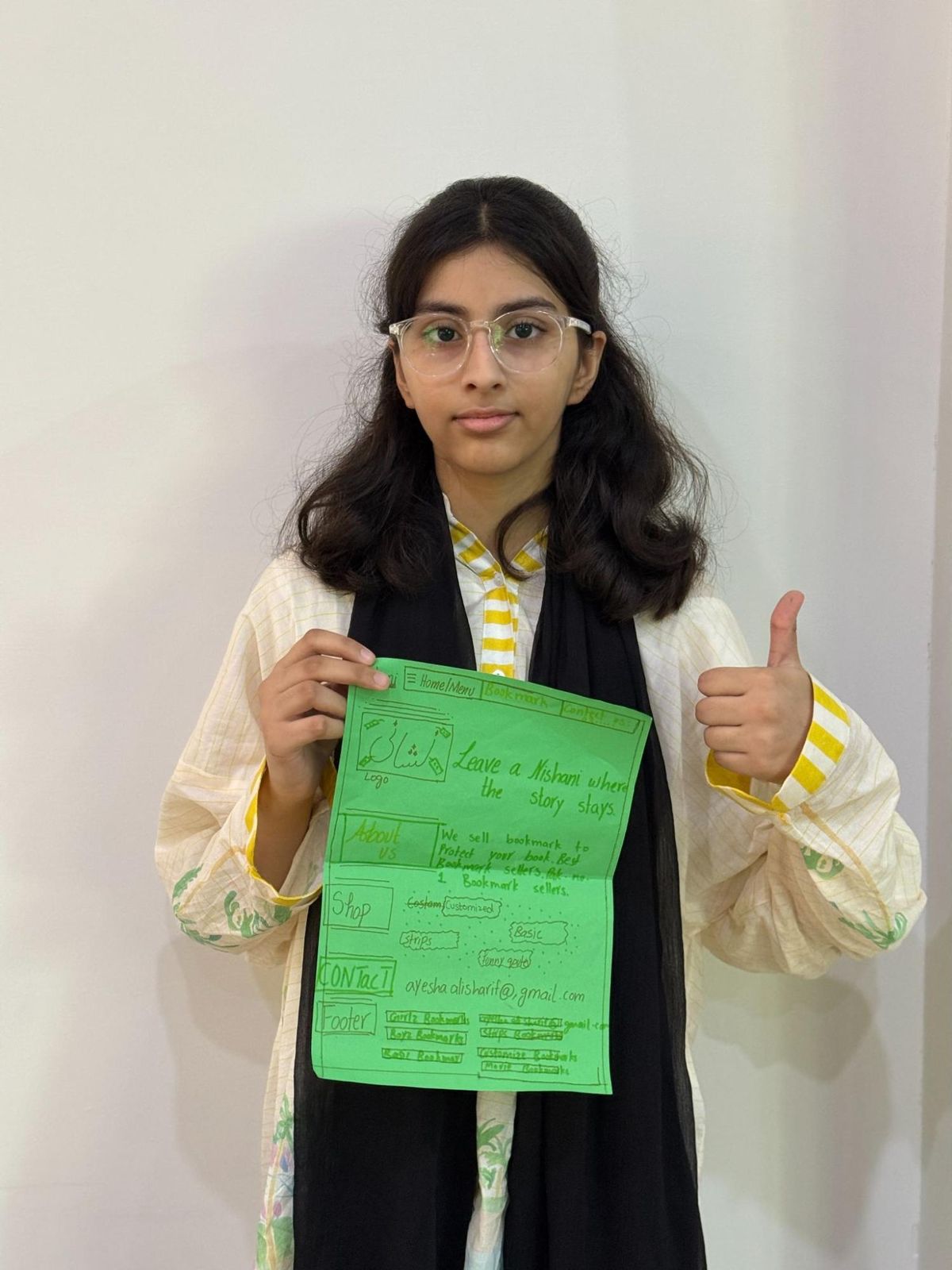
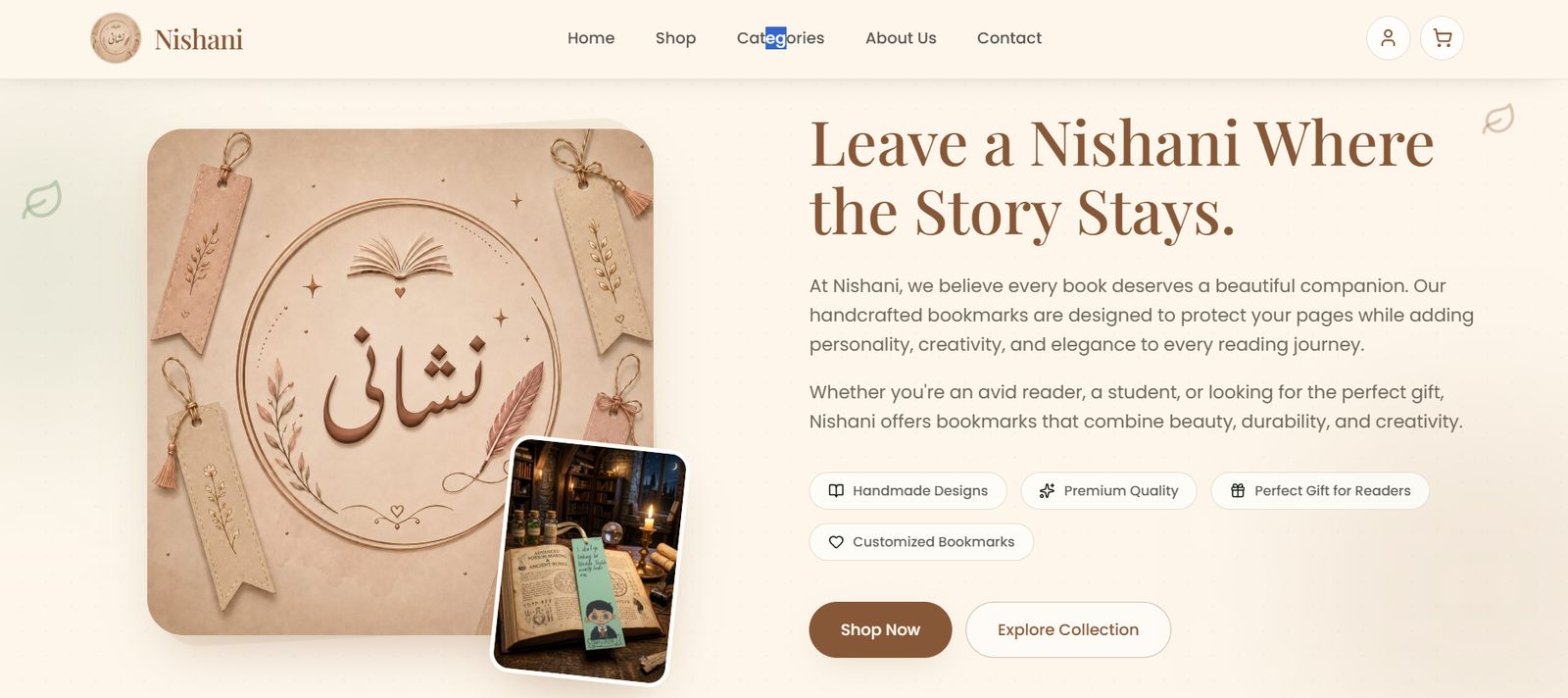
These are tangible outputs. But they do not tell the whole story. The more significant change happened inside her.
At the beginning, Ayesha was hesitant to talk about what she wanted to build. She was unsure where to start and believed creating something from scratch at her age would be extremely difficult. By the end, she was comfortable speaking to customers, presenting her work to groups of people, sharing her experience without feeling judged, and looking at a large challenge as a series of smaller steps.
Her confidence did not come from being told she could do it. It came from doing it.
Perhaps Nishani Was Never Just About the Product
The name says something about the idea. Nishani can mean a memento, keepsake, souvenir, or sign. That fits Ayesha's vision.
She believes that as we grow older, we often become versions of ourselves shaped by expectations, responsibilities, and the world around us. Yet certain characters, stories, and memories can still bring a glimpse of who we were as children.
That is what she wants Nishani to evoke. Not simply something a reader uses between pages, but a small reminder of something they once loved. Something familiar. Something playful. Something that makes them smile before they even realize why.
What Ayesha Really Built
Ayesha says she never imagined that, at such a young age, she would be able to build something using her own creativity and dedication. That may be the most important outcome of these four weeks.
Nishani became a brand. But Ayesha became more confident in her ability to create one. She learned to break complexity into manageable pieces. She learned to listen to customers. She learned to make, test, adjust, present, sell, create content, use new tools, and ask for help.
And she learned something that may stay with her far longer than any bookmark: I can start.
At StartupKidz, we believe the institution should not become the hero of a child's story. We can provide a safe, equitable environment in which children can experiment, question, receive feedback, and try again. But the work belongs to the child. The support belongs to the family. And the growth is theirs.
Ayesha's four weeks are a reminder that sometimes the biggest transformation is not what a child builds for the world. It is what they begin to believe about themselves.
Leave a Nishani where the story stays.